
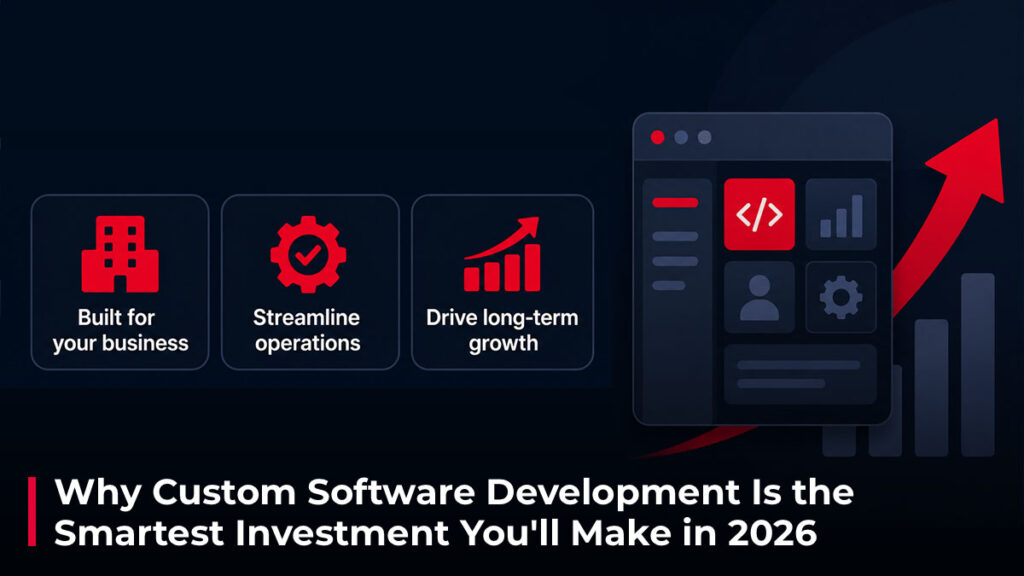
Why Custom Software Development Is the Smartest Investment You'll Make in 2026
For years, businesses have built their operations around a mix of off-the-shelf tools. One platform manages customers, another handles workflows, a third stores data, and several more fill the gaps in between.
While this approach gets businesses moving quickly, it often creates fragmented processes, rising subscription costs, and limitations that become more obvious as organizations scale.
In 2026, this trend is changing shape.
Businesses are reconsidering the way they invest in technology. Instead of adapting their processes to fit generic software, they are turning to custom software development solutions that align with their operations, integrate with existing systems, and support long-term growth.
How SaaS Costs Add Up Over Time
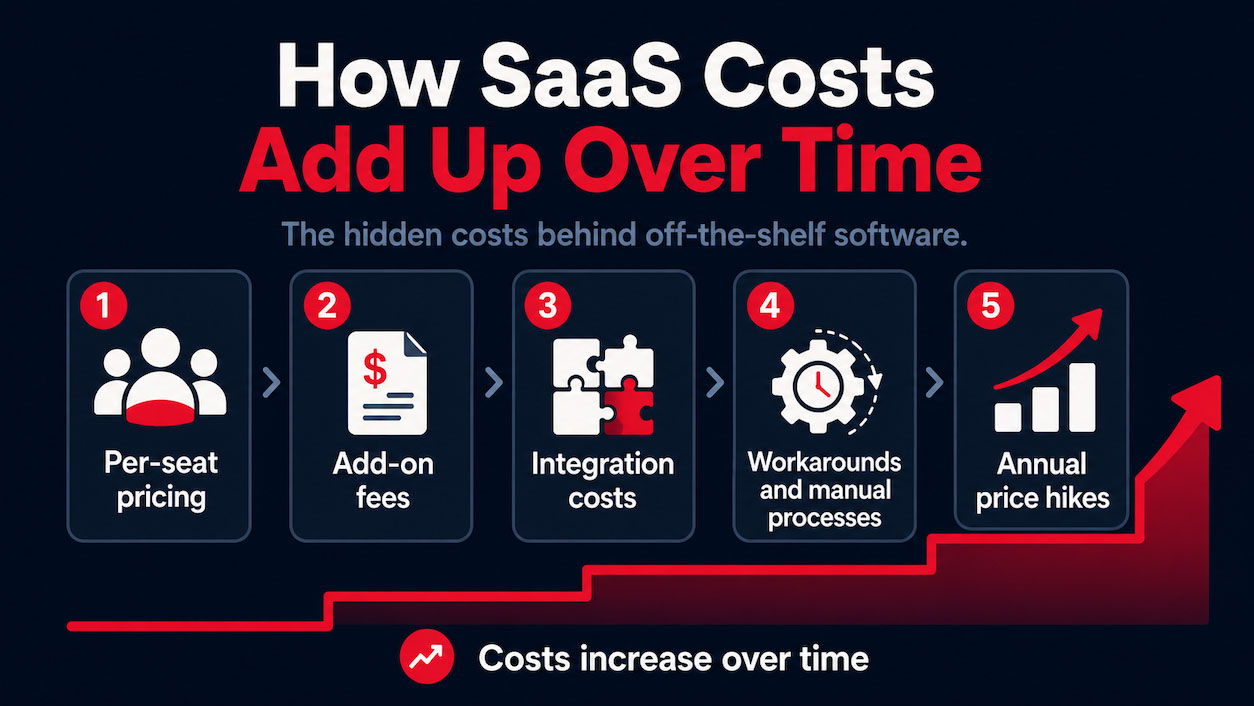
When you sign up for a SaaS product, you see one number, the monthly price. But the real cost is almost always higher once you add up everything:
- Per-seat pricing
- Add-on fees
- Integration costs
- Workarounds and manual processes
- Annual price hikes
SaaS pricing across the board has been climbing. Tools that cost $50 per user per month three years ago are often $80–100 today, and the feature sets haven’t always kept up. You’re essentially renting software that was built for thousands of different businesses, which means it was truly optimized for none of them.
That’s not a criticism of SaaS as a concept. For many use cases, it’s still the most practical choice. But for businesses with specific workflows, high transaction volumes, or genuine competitive complexity, the math starts to shift.
These are the reasons many organizations are evaluating custom software solutions as a long-term alternative to traditional SaaS platforms.
Where Custom Software Development Wins
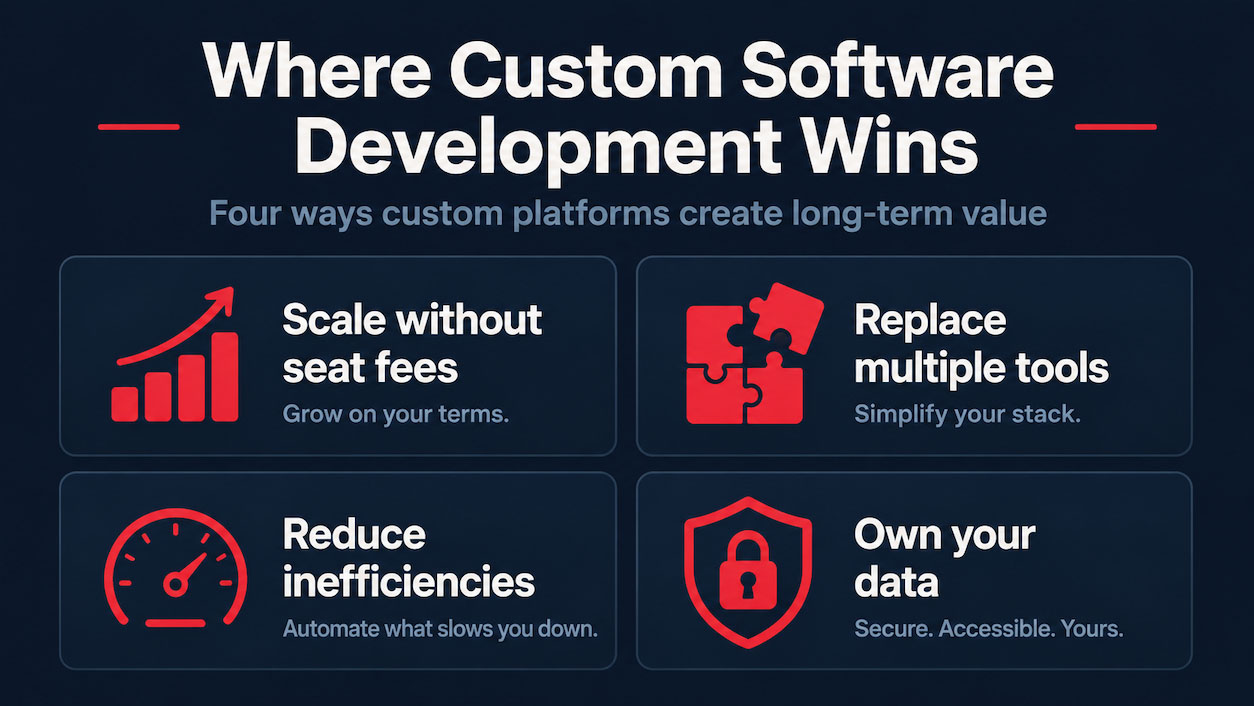
It doesn't charge you to grow
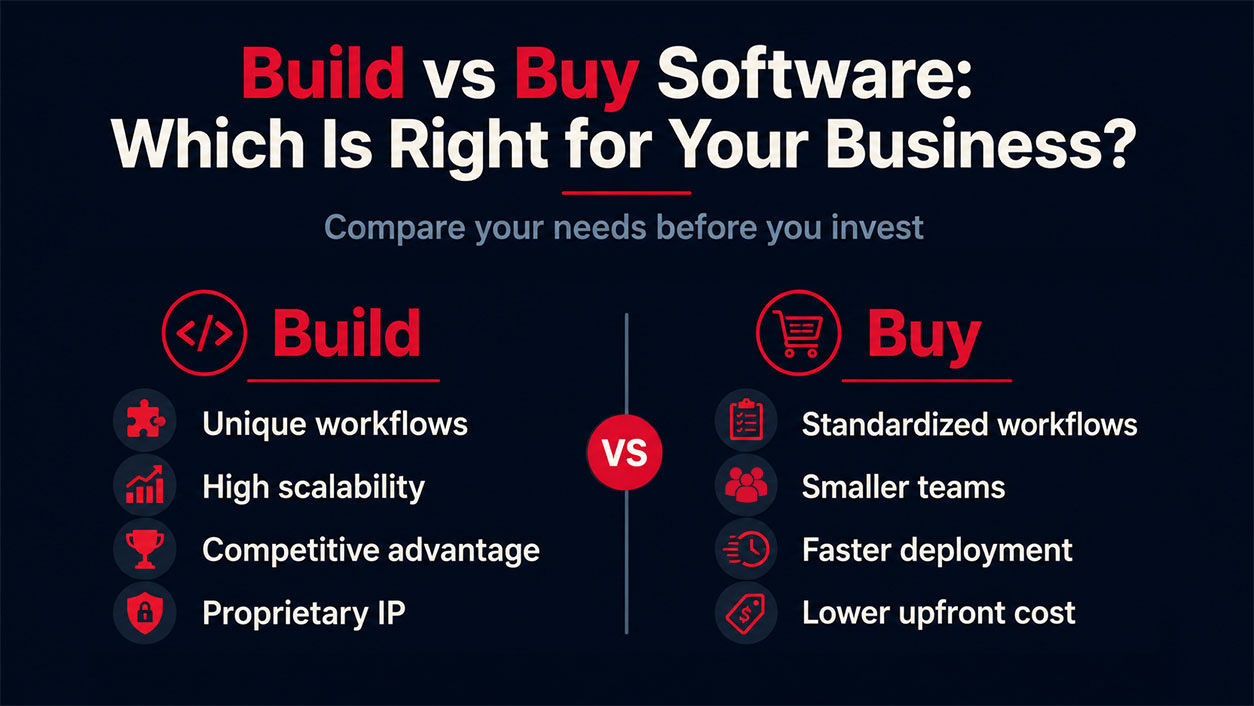
With SaaS, every new employee is a new license. Every new feature is a new tier. With custom software, the pricing model is yours. You scale operations without your software costs scaling at the same rate.
It replaces multiple tools with one
Most mid-sized businesses are running four to seven tools that partially overlap in function. A custom platform, built around how your business actually operates, can consolidate that stack. The savings in subscriptions alone often offset a significant chunk of the build cost, once you cancel what you no longer need.
It eliminates expensive inefficiencies through business process optimization
This one is underrated. When software fits your workflow perfectly, your team stops doing the workarounds. These time costs are real, they compound, and they rarely show up on a software budget line. But they show up on your payroll.
Your data stays yours
With most SaaS platforms, your operational data lives in their system. Exporting it is possible but often painful, and it’s never in exactly the format you need. With custom software, your data architecture is yours by design. That’s a significant advantage when you’re making decisions, running analysis, or eventually considering a business valuation.
The Hidden Math Behind Software Decisions
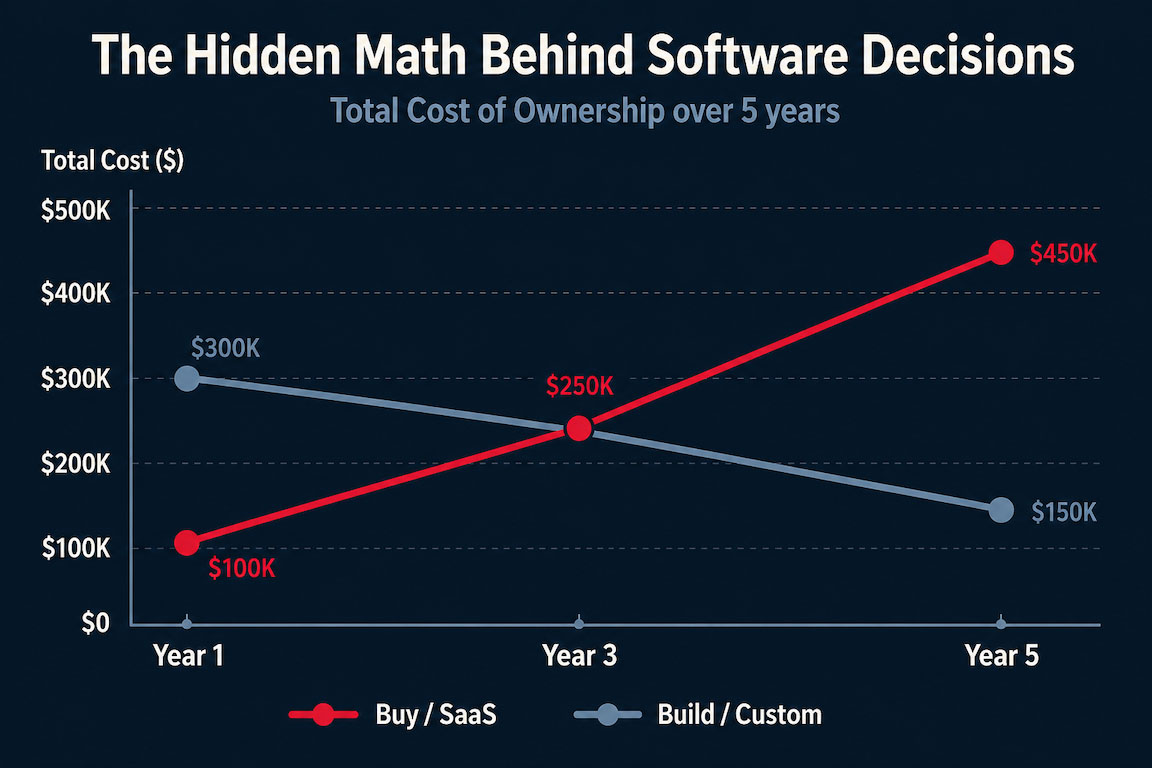
Here’s the most common mistake when evaluating custom software: comparing the wrong numbers.
A business looks at a custom build quote, say, $50,000–$150,000, depending on scope and immediately compares it to what they’re paying in Year 1 for SaaS. Off-the-shelf wins easily in that comparison.
But that’s not the right question.
The right question is: what does each option cost over three to five years?
In Year 1, SaaS wins on price. But costs grow every year. More users mean more seats. More gaps mean more tools. More tools mean more complexity. Three years in, many businesses discover they’re spending more on software while still relying on workarounds to support everyday operations.
That’s the full picture most budget conversations miss.
This is called Total Cost of Ownership (TCO), and it’s how any serious financial decision should be evaluated. Custom software is always an investment with a payback period. And increasingly in 2026, that payback period is getting shorter.
Why 2026 Is the Year For Building Smarter Than Buying
A few years ago, the counterargument to custom software was straightforward: it’s expensive to build and slow to deliver. That’s less true now.
AI-assisted development tools have meaningfully changed how software gets built. Modern software development services now leverage AI-assisted coding, automated testing, and cloud-native architectures to accelerate delivery while maintaining quality.
Development timelines that used to be 12–18 months are now achievable in 4–8 months for a comparable scope. This doesn’t make custom software development cheap, but it makes it more accessible than it used to be.
At the same time, cloud infrastructure platforms such as Amazon Web Services, Google Cloud, and Microsoft Azure have made custom software development more cost-effective and scalable than ever before.
Meanwhile, the SaaS market is maturing. The era of aggressive introductory pricing to capture market share is mostly behind us. Vendors are optimizing for margins now, and that means prices are going up, not down. If you locked in a deal two years ago, enjoy it. The renewal conversation will look different.
For businesses thinking about long-term enterprise value, or for investors evaluating a company, proprietary internal systems are an asset. They signal:
- Operational maturity
- Reduced key-person dependency
- Switching costs that protect the business’s own moat
- Stronger IP and valuation
- Scalability that investors can see
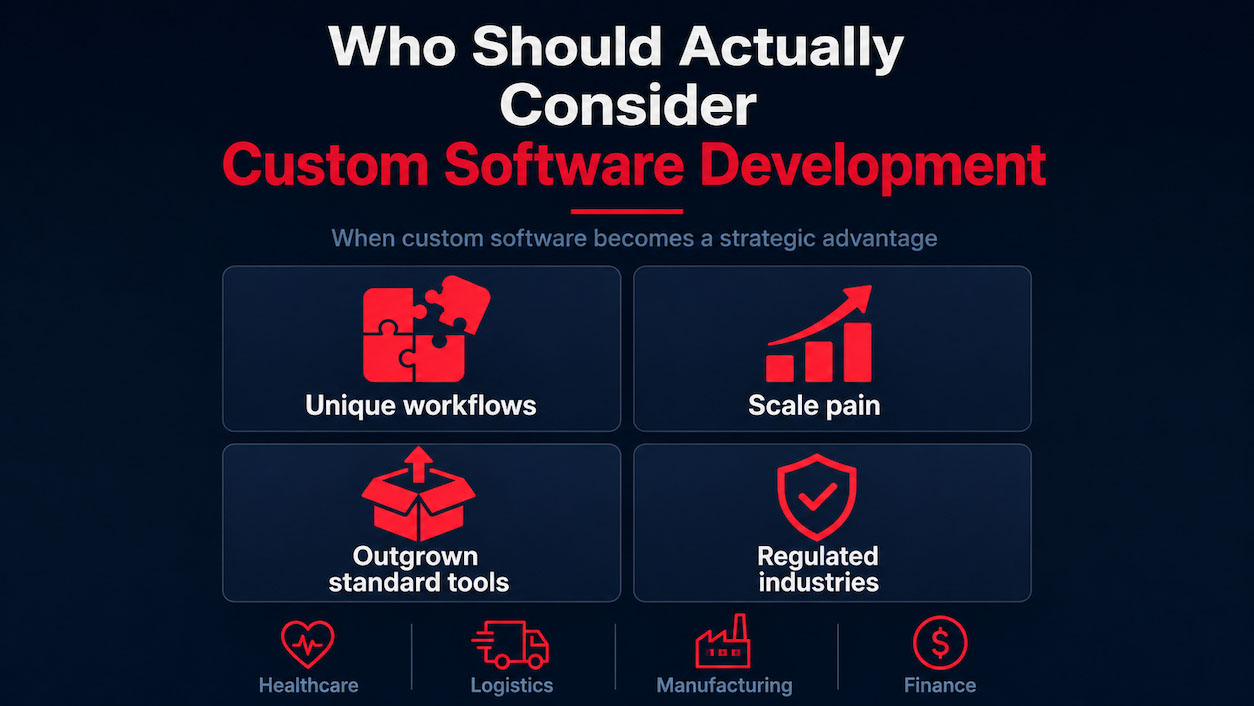
Who Should Actually Consider Custom Software Development
Custom software is one of the few areas where a business can build a genuine operational edge that competitors can’t simply copy by signing up for the same plan.
If you’re an early-stage startup still figuring out what your business model looks like, building custom tooling too early is a distraction and a cash drain. Use off-the-shelf until you know exactly what problem you’re solving and how.
Custom software makes the most sense when:
- Your workflows are genuinely specific to your business
- You’re operating at a scale where inefficiency is costing you real money
- You’ve already hit the ceiling of what standard tools can do for you
- You’re in a regulated industry where compliance requirements are hard to meet with generic platforms
A hybrid approach also works well for many businesses. For example, a custom core system that handles what makes you unique, combined with best-in-class SaaS for standard functions like email, HR, or accounting.
Industries such as healthcare, logistics, manufacturing, finance, insurance, and professional services often benefit most from custom software because their operational requirements extend beyond what standard software platforms can support.
How to Actually Evaluate the Decision
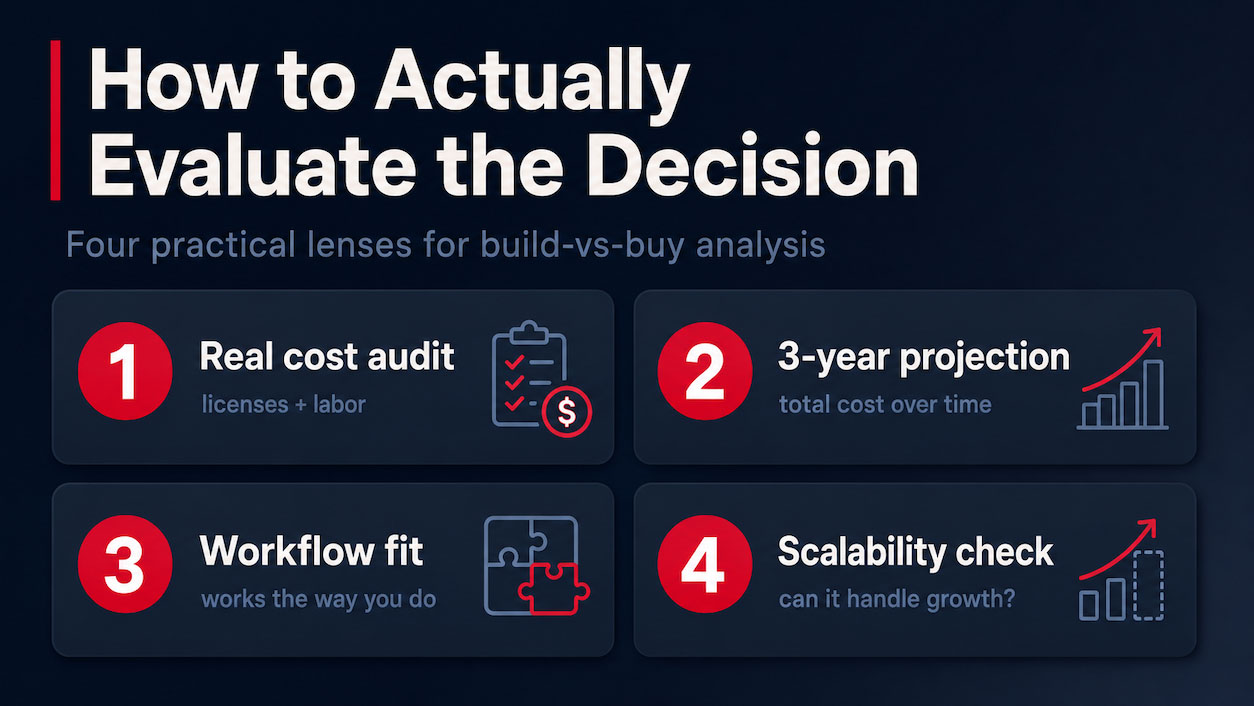
Before going into any build-vs-buy analysis, work through these four lenses with your team:
The Real Cost Audit
Add up everything your current stack costs, including licenses, integrations, the tools you bought to fix the gaps in other tools, and most importantly, the time employees spend navigating inefficient workflows. Convert those hours to salary cost. Most businesses are genuinely surprised by this number.
The Three-Year Projection
Take your current software spend and project it forward, factoring in seat growth, annual price increases, and new tools you’ll likely need. Then compare those costs against a custom software investment over the same period.
The Workflow Fit Test
Ask your ops lead one question: “If you could redesign our software stack from scratch around how we actually work, what would change?” If the answer takes less than two minutes, your current tools are probably fine. If they’re still talking twenty minutes later, you have your answer.
The Scalability Check
Ask your tech lead: “Can our current systems handle 3x our current volume without a major overhaul or significant added cost?” If the answer is no, or uncertain, you’re already carrying technical debt that will cost more to fix later than to solve now.
Now, here’s the red flag you shouldn’t ignore. If your team is building workarounds to make your tools work, the tools aren’t working. They are not serving your business. They’re being tolerated by it.
The Bottom Line
Custom software, when approached correctly, becomes part of your business infrastructure.
The companies that are operationally strong in 2026 are the ones that treat their internal systems as a strategic investment rather than a recurring expense to be minimized. They’re running leaner, moving faster, and making better decisions, because there’s a difference between a business that runs on software and a business that owns its software. And, in 2026, that distinction matters more than it ever has.
If your current software stack feels like it’s creating more obstacles than opportunities, it may be time to rethink the technology supporting your business. Investing in custom software today can help streamline operations, improve agility, and position your organization for long-term growth.
Explore how our custom software development services can align with your long-term vision.