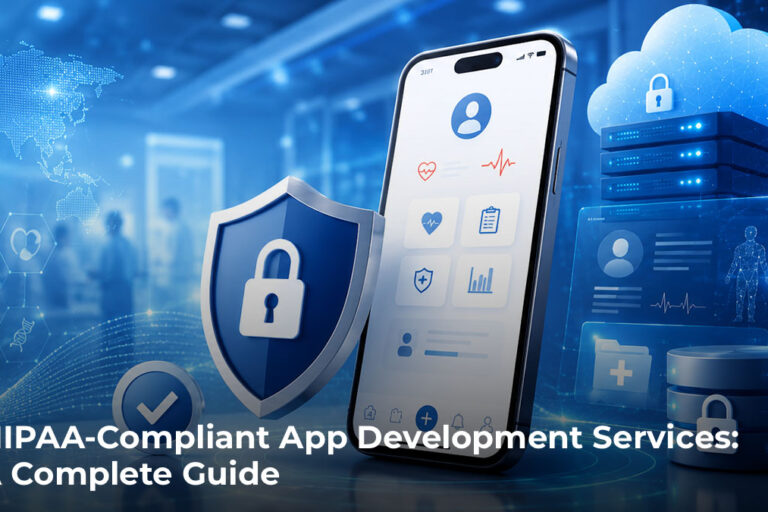

HIPAA-Compliant App Development Services: A Complete Guide
Healthcare is no longer delivered only in clinics and hospitals.
A growing share of patient interactions, clinical decisions, and care coordination now happens through software. Yet building for healthcare is not like building for any other industry. The regulations are stricter, the integrations are more complex, and the cost of getting it wrong extends beyond the product.
This guide covers everything you need to know about healthcare app development, from HIPAA compliance and essential features to technology choices, costs, and what to look for in a development partner.
What Is Healthcare App Development
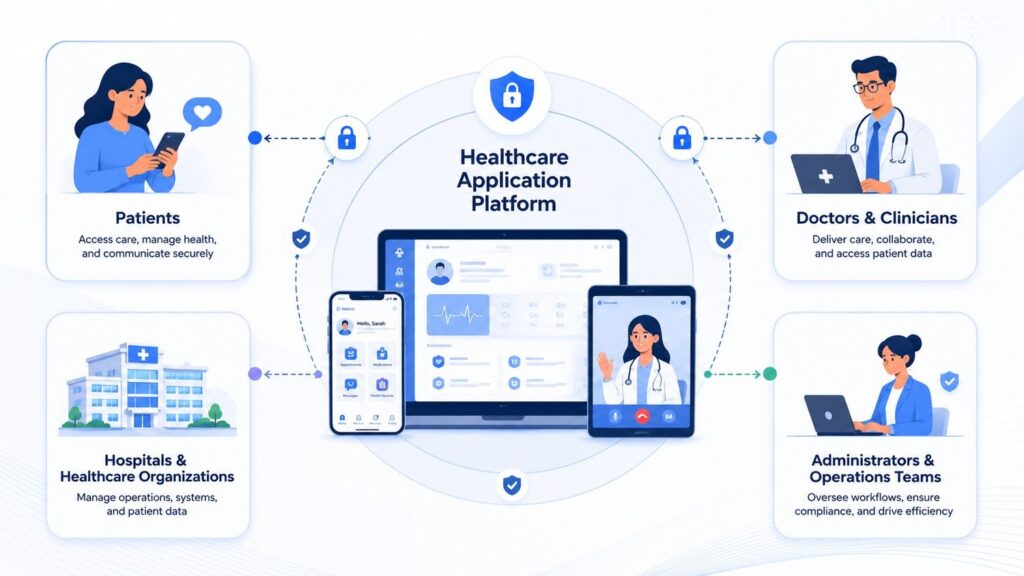
Healthcare app development is the process of designing, building, and deploying software applications that support the delivery, management, and experience of healthcare services. These applications run across mobile devices, web browsers, and integrated hospital systems, and are purpose-built to meet the unique demands of a regulated, data-sensitive industry.
Unlike general software development, healthcare app development operates within a defined set of clinical, legal, and technical constraints. Applications must comply with regulations such as HIPAA in the United States, handle sensitive patient data with rigorous security protocols, and in many cases integrate with established health infrastructure like Electronic Health Records (EHR) systems, medical devices, and hospital networks.
Today, healthcare apps serve a wide range of functions. On the patient side, they power appointment scheduling, teleconsultation, chronic disease monitoring, medication reminders, and access to personal health records. On the clinical side, they support diagnostic decision-making, remote patient monitoring, care coordination, and real-time communication between providers. Administrative teams rely on them for billing, compliance tracking, workforce management, and operational reporting.
What makes modern healthcare app development particularly significant is its role in expanding access to care. With smartphone penetration rising globally and patients increasingly expecting digital-first interactions with their providers, well-built healthcare applications are becoming a core part of how care is delivered, documented, and experienced.
Types of Healthcare Apps
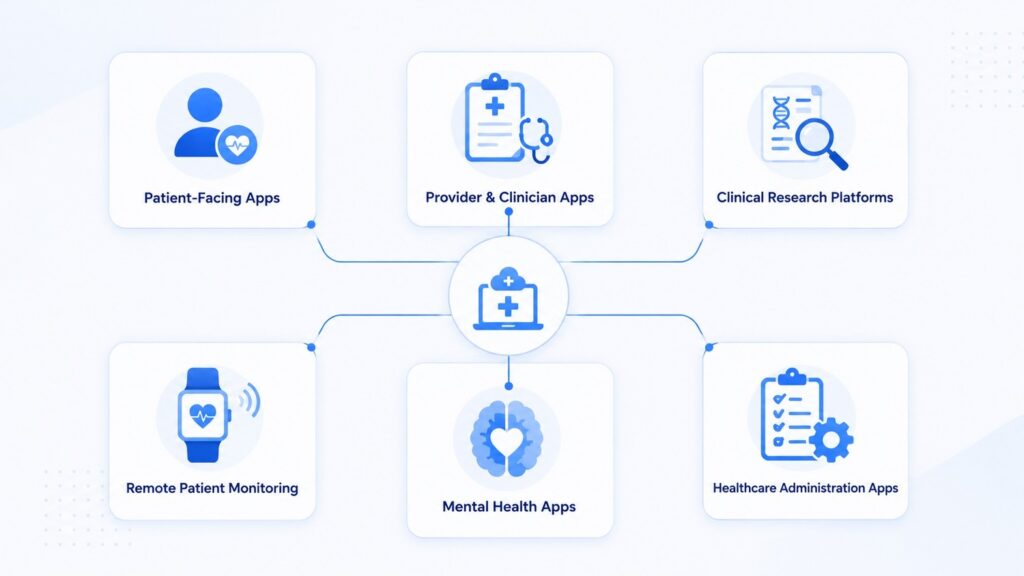
Healthcare applications fall into several categories, each serving different users and clinical workflows.
Patient-Facing Mobile Health Apps
Patient-facing apps handle tasks like appointment scheduling, prescription refills, health tracking, and secure access to medical records. For example, MyChart (developed by Epic) lets patients at thousands of healthcare organizations view visit summaries and communicate with providers.
Provider and Clinician Applications
Clinician apps focus on workflow efficiency. Common functions include e-prescribing, patient charting, and clinical decision support. An emergency department might use a mobile app to surface critical lab values and flag abnormal results in real time.
Clinical Research and Trial Platforms
Research platforms collect study data, manage participant enrollment, and enforce protocol compliance. REDCap, a secure web application widely adopted in academic research, is one of the most common integration points for clinical trial platforms. The mindLAMP platform, developed for psychiatric research, is another example of how mobile technology captures real-world mental health data at scale.
Remote Patient Monitoring Solutions
Remote monitoring apps connect to wearables and medical devices to track vitals like blood pressure, glucose levels, and heart rate. Home healthcare settings increasingly rely on remote patient monitoring to manage chronic conditions between office visits.
Mental Health and Behavioral Health Apps
Mental health apps support therapy delivery, mood tracking, crisis intervention, and behavioral data collection. Apps in this category are improving mental health outcomes but often collect sensitive information that requires careful attention to privacy and consent.
Healthcare Administration and Workflow Apps
Back-office applications handle scheduling, billing, inventory management, and staff coordination. While less visible to patients, administrative apps are essential for operational efficiency within healthcare organizations.
HIPAA Compliance Requirements for Medical App Development
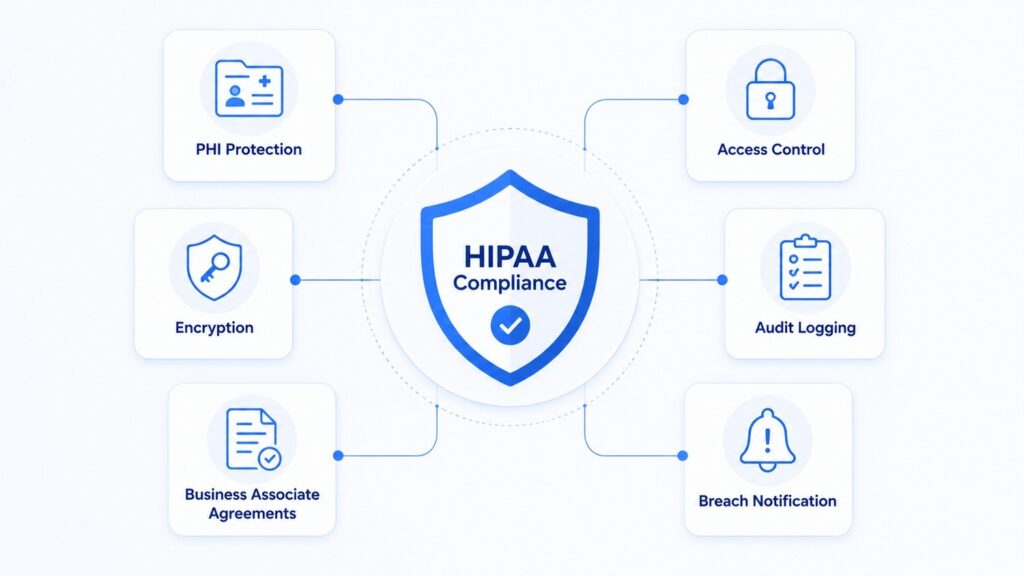
Any healthcare app that stores, transmits, or processes PHI (Protected Health Information) is subject to HIPAA requirements. The consequences of getting this wrong are significant. In 2025 alone, nearly 57 million individuals were affected by healthcare data breaches.
PHI and Privacy Rules
PHI includes any patient-identifiable health data: names, diagnoses, treatment records, and even IP addresses when linked to health information. The HIPAA Privacy Rule establishes standards for how this data can be used and disclosed.
Technical Safeguards for Mobile Applications
HIPAA’s Security Rule requires specific technical measures to protect electronic PHI (ePHI):
- Access Controls: Unique user IDs and role-based permissions ensure users only see data relevant to their role
- Audit Controls: All access to PHI is logged for review and investigation
- Integrity Controls: Mechanisms prevent unauthorized alteration of patient data
- Transmission Security: Encryption protects data as it moves between devices and servers
Business Associate Agreements and Vendor Responsibilities
Any healthcare app development company that handles PHI on behalf of a covered entity (like a hospital or clinic) is considered a Business Associate under HIPAA. A Business Associate Agreement (BAA) legally binds the development partner to protect patient data according to federal standards.
Encryption and Access Control Standards
Strong encryption is non-negotiable in healthcare app development. Data at rest typically requires AES-256 encryption, while data in transit uses TLS protocols. Multi-factor authentication adds another layer of protection for user access.
Audit Logging and Breach Notification
HIPAA mandates that all access to PHI be logged and auditable. If a breach occurs, strict notification procedures apply. Affected individuals and the Department of Health and Human Services must be notified within specific timeframes defined by HIPAA.
Essential Features for HIPAA-Compliant Healthcare Apps
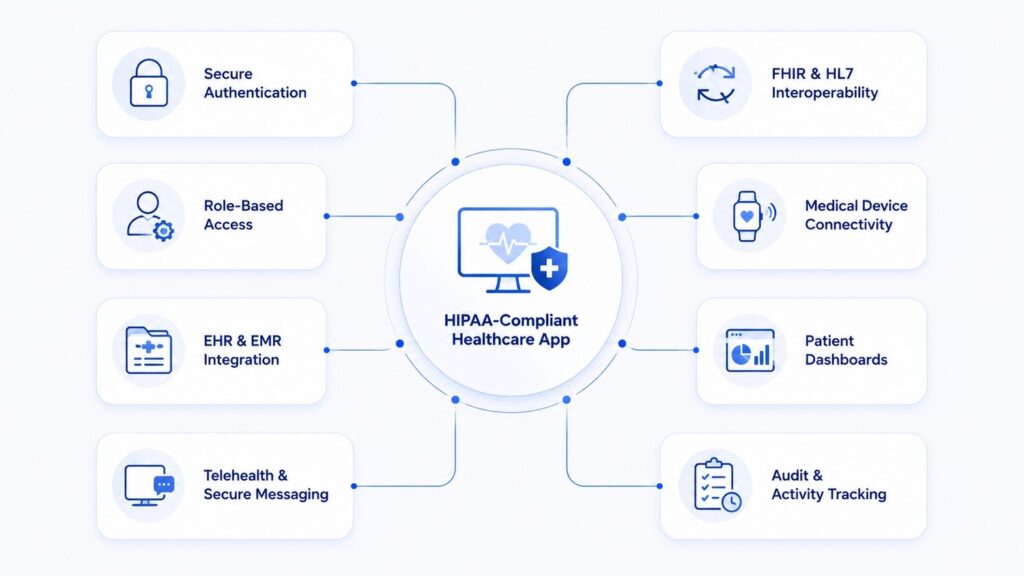
Beyond compliance checkboxes, there are certain features that determine whether a healthcare app actually works in clinical settings.
Secure User Authentication and Authorization
Multi-factor authentication, biometric login options (Face ID, fingerprint), and automatic session timeouts are baseline requirements. Role-based access control ensures a billing clerk doesn’t see the same data as a treating physician.
EHR and EMR Integration
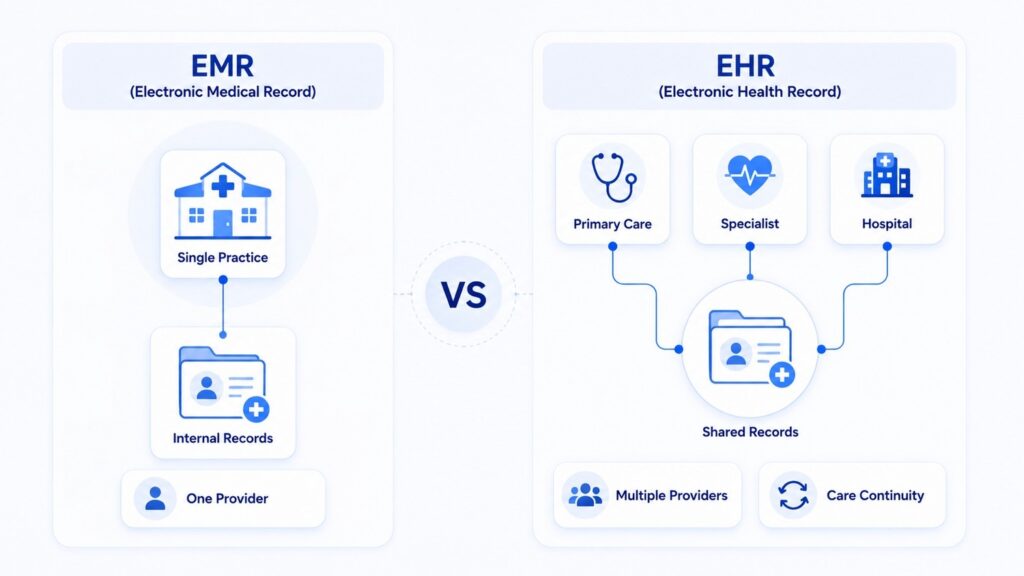 Connecting to Electronic Health Record (EHR) and Electronic Medical Record (EMR) systems is often the most complex part of healthcare app development. While the terms are sometimes used interchangeably, an EMR typically refers to records within a single practice, while an EHR aggregates data across multiple providers.
HL7 and FHIR Interoperability
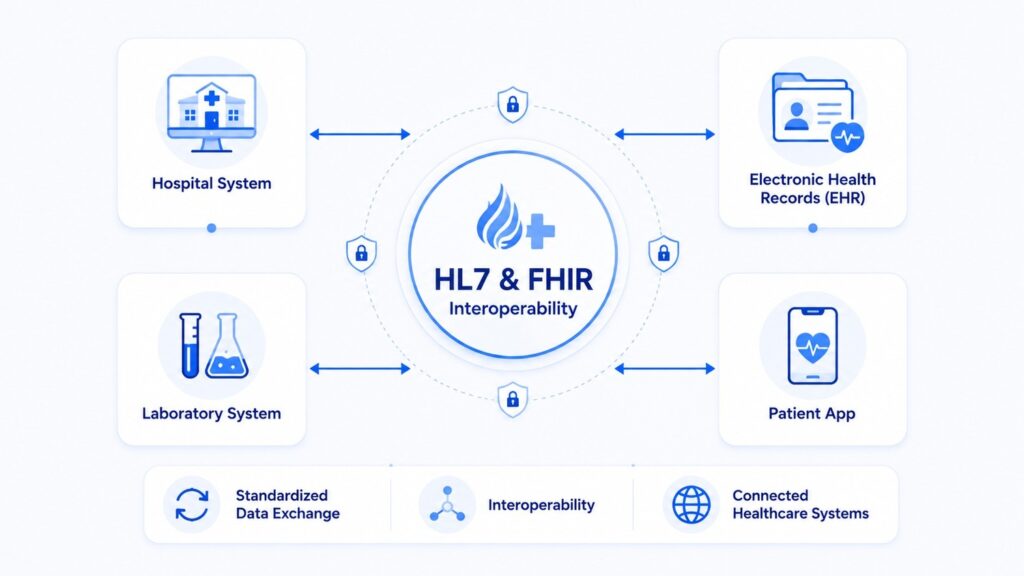 HL7 (Health Level Seven) and FHIR (Fast Healthcare Interoperability Resources) are the standards that enable different healthcare systems to exchange data, with 71% of countries surveyed reporting active FHIR use as of 2025. For example, a hospital system might use FHIR APIs to pull patient records from a primary care provider’s EHR into a specialist’s mobile app.
Telehealth and Secure Messaging
The pandemic accelerated the adoption of video consultations, encrypted chat, and virtual waiting rooms, and patient expectations have stayed high ever since. Secure messaging between patients and providers has now moved from a value-added feature to a baseline requirement in modern healthcare.
Medical Device and Wearable Connectivity
Apps often integrate with external hardware like glucose monitors, heart rate sensors, blood pressure cuffs, and other medical devices. Bluetooth connectivity and platform-specific APIs like Apple’s HealthKit or Google Fit handle the data exchange.
Patient Data Dashboards and Analytics
Visualization tools help patients track health trends over time, while clinicians benefit from population health insights and predictive analytics. AI-powered features can flag at-risk patients or suggest interventions based on historical data.
Healthcare App Development Process
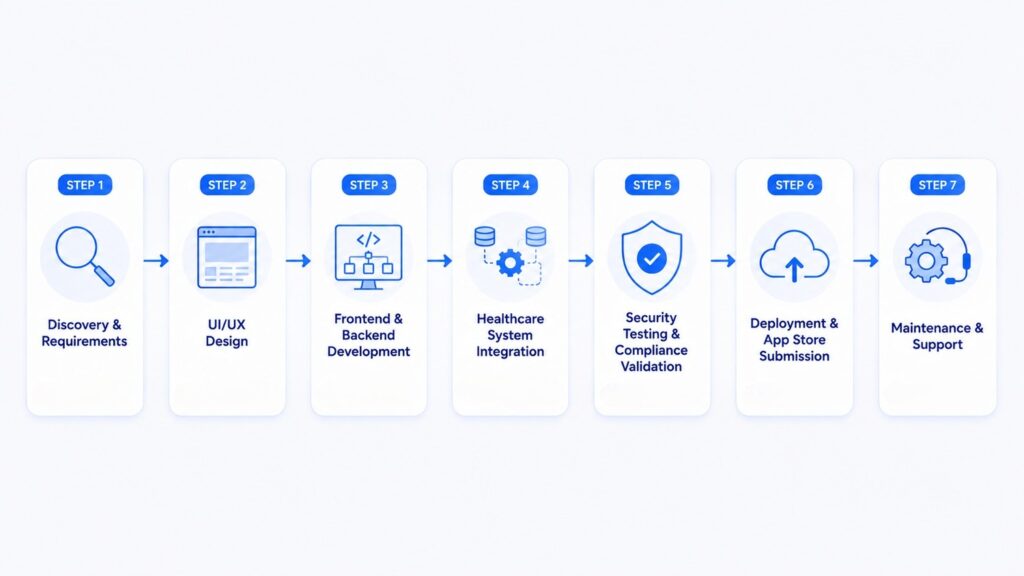
A structured development process reduces risk and keeps complex healthcare projects on track.
1. Discovery & Requirements Gathering
The first phase involves stakeholder interviews, workflow analysis, and documenting compliance requirements. The goal is to define what success looks like before any code is written.
2. UI/UX Design For Clinical Workflows
Healthcare interfaces work in fast-paced environments where users are often interrupted. Accessibility, ease of use, and minimal clicks to complete tasks are top priorities during design.
3. Frontend & Backend Development
The core construction phase builds both the user-facing application and the server-side infrastructure. Development can involve native iOS and Android approaches or cross-platform frameworks depending on project requirements.
4. Healthcare System Integration
Connecting to EHRs, lab systems, pharmacy networks, and medical devices happens during this phase. HL7 and FHIR standards govern how data flows between systems.
5. Security Testing & Compliance Validation
A structured mobile app testing process, including penetration testing, vulnerability assessments, and HIPAA compliance audits are essential before launch. Third-party security reviews add an extra layer of objectivity.
6. Deployment & App Store Submission
Healthcare apps can be distributed through public app stores or private enterprise channels. Clinical settings often use Mobile Device Management (MDM) systems to control which apps appear on staff devices.
7. Post-Launch Maintenance & Support
Development doesn’t end at launch. Ongoing support covers OS updates, security patches, feature enhancements, and continuous compliance monitoring.
How Much Does Healthcare App Development Cost
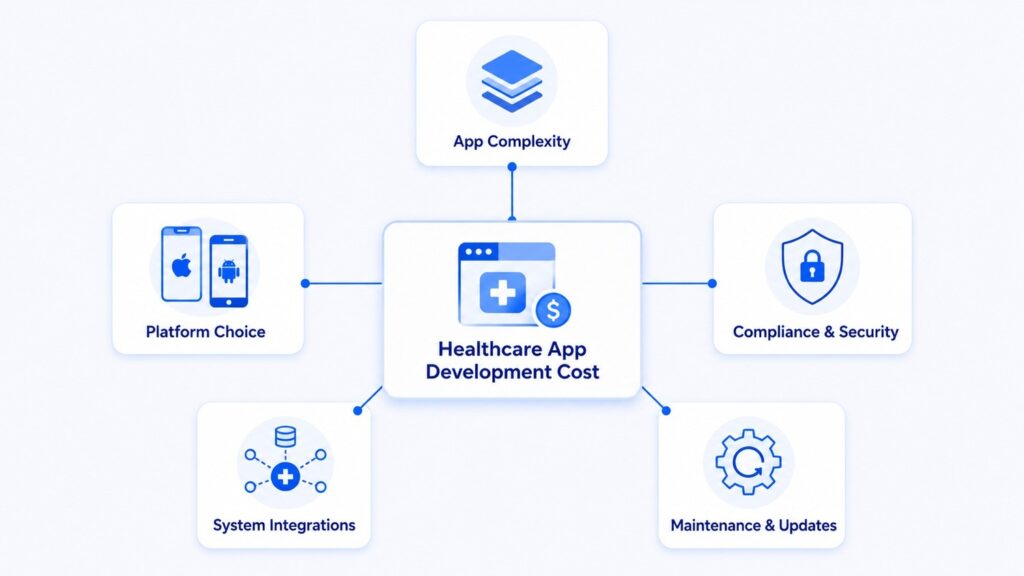
Healthcare app costs vary significantly based on several factors rather than following a fixed price sheet.
App Complexity & Feature Scope
A basic patient portal costs far less than a comprehensive platform with telehealth, device integration, and AI-powered analytics. More features mean more development hours.
Platform & Technology Choices
Native iOS and Android development typically costs more upfront than cross-platform approaches using React Native or Flutter. Each path has different long-term maintenance implications.
Compliance & Security Requirements
HIPAA compliance adds development time for security features, testing, and documentation. Cutting corners here creates legal and financial risk, with healthcare breaches costing $7.42 million on average.
Integration with Existing Systems
Connecting to legacy EHRs and hospital databases is often the most time-consuming part of healthcare projects. Complex integrations extend timelines and budgets.
Ongoing Maintenance & Updates
Estimating your total app development cost means planning for long-term support, involving security patches, OS compatibility updates, and future feature development.
Healthcare Mobile App Development Technologies
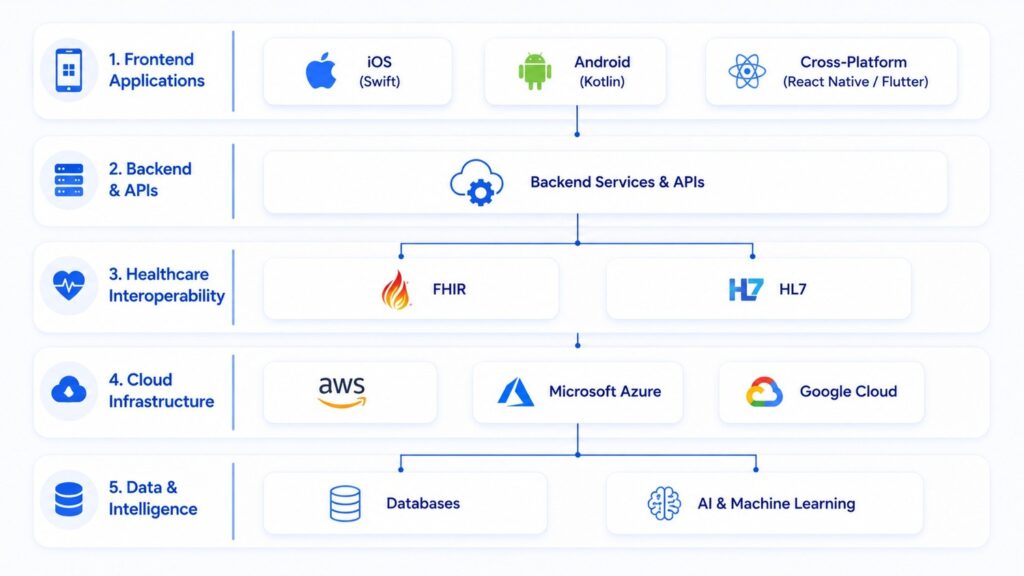
The technology stack for healthcare apps balances performance, security, and maintainability. Choosing the right combination depends on clinical use case, regulatory requirements, and how deeply the application needs to integrate with device hardware or existing health infrastructure.
iOS and Android Native Development
Native development uses Swift for iOS and Kotlin for Android. This approach offers the best performance and full access to device capabilities like HealthKit and Bluetooth integration. It also makes it easier to meet App Store and Play Store review requirements for medical applications, which are more stringent than those for general consumer software.
Cross-Platform Frameworks For Healthcare Apps
Frameworks like React Native, Flutter, and .NET MAUI allow teams to share a significant portion of the codebase across iOS and Android, which can meaningfully reduce development time and ongoing maintenance overhead. React Native benefits from a large ecosystem and JavaScript familiarity, while Flutter’s compiled Dart code offers performance closer to native.
The trade-offs are real but manageable. Some native health APIs require platform-specific bridge code, and rendering performance for graphics-intensive use cases such as medical imaging can fall short of native. For many healthcare apps, particularly those focused on patient engagement, scheduling, or care coordination, cross-platform is a practical and cost-effective choice.
Backend and Cloud Infrastructure
HIPAA-compliant cloud services from AWS, Azure, or Google Cloud provide the foundation for healthcare backends.
AWS offers HIPAA-eligible services including RDS, DynamoDB, S3, and Lambda, and is the most widely adopted in the healthcare sector.
Azure is a strong choice for organizations with existing Microsoft licensing, and its integration with services like Azure Health Data Services and FHIR-native APIs makes it particularly well-suited for interoperability-focused projects.
Google Cloud‘s Healthcare API supports FHIR, HL7v2, and DICOM natively, making it a capable option for imaging and data exchange workloads.
On the application layer, Node.js and .NET Core are common choices for API development, while Python sees frequent use in data pipelines and ML workloads. PostgreSQL is widely used for structured clinical data, while MongoDB suits document-oriented use cases such as storing variable patient records.
AI and Machine Learning Integration
AI is increasingly embedded across the clinical workflow rather than confined to standalone features.
Predictive analytics models assess disease risk and flag deteriorating patients based on vitals trends, lab values, and historical data.
Natural language processing powers ambient clinical documentation, extracting structured data from physician dictation and reducing the manual burden of EHR entry.
Computer vision enables automated analysis of medical imaging, including radiology scans, dermatology images, and pathology slides, with some FDA-cleared tools now matching specialist accuracy in narrow domains.
Large language models are also being applied to patient-facing interfaces, powering symptom checkers, discharge instruction summarization, and clinical decision support.
Benefits of Custom Healthcare App Development
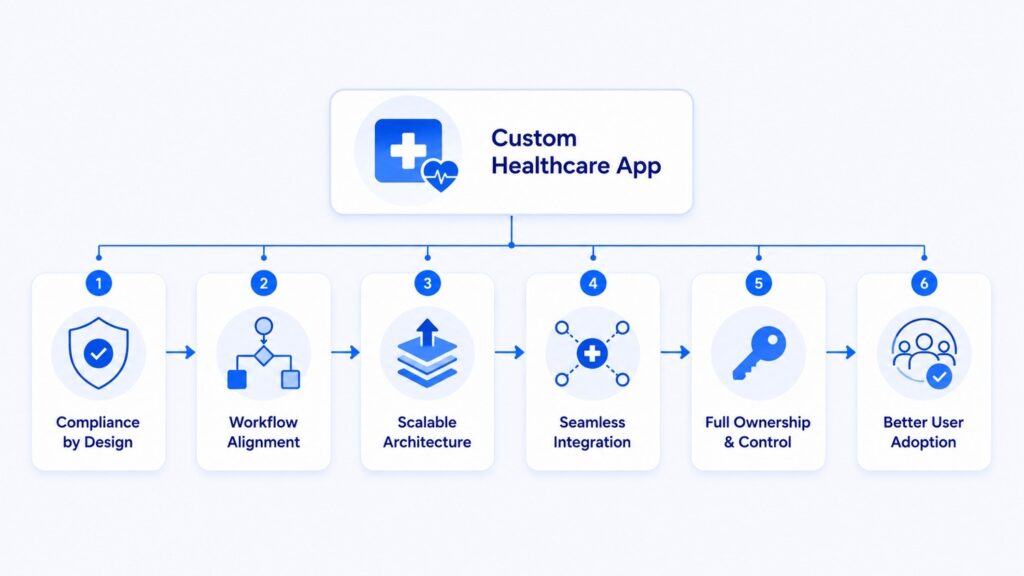
Compliance by Design: Security, HIPAA requirements, and access controls are built into the foundation, not added once problems arise.
Workflow Alignment: Software is shaped around how your clinical and administrative teams actually work, not the other way around.
Scalability on Your Terms: Easily expand to new facilities, user roles, or service lines without hitting vendor-imposed limitations.
Lower Long-Term Costs: Eliminate recurring licensing fees, per-seat charges, and the hidden costs of adapting off-the-shelf tools.
Seamless System Integration: Connect directly with your existing EHRs, medical devices, and third-party platforms without workarounds.
Full Ownership and Control: You own the codebase, the roadmap, and the ability to evolve the product on your timeline.
Reduced Vendor Dependency: No waiting on vendor updates or negotiating costly tier upgrades to access features you need.
Better User Adoption: Intuitive interfaces built for your specific users drive faster onboarding and fewer workflow errors.
Why Choose A Healthcare App Development Company
Building healthcare applications in-house demands a deep understanding of compliance frameworks, clinical workflows, and the unique challenges of working within a regulated industry. Most organizations simply don’t have that combination sitting on their existing team, and trying to build it from scratch introduces unnecessary risk and delay.
A partner who has built in healthcare before knows where the hard problems are before they surface, and has the processes in place to handle them without derailing the project.
Before you sign a contract, evaluate your potential partner on these:
- Healthcare domain expertise: Hands-on experience with HIPAA requirements, medical device regulations, and how clinical teams actually work.
- Full-cycle development: They should offer full-cycle development, meaning they’re with you from discovery and design all the way through deployment and long-term support.
- Integration capabilities: Proven ability to connect with EHRs, medical devices, and a range of existing infrastructure.
- Security-first approach: Track record of building compliant, secure applications
When compliance, security, and clinical accuracy are non-negotiable, working with a partner who’s been there before makes all the difference. Tell us about your project and we’ll help you find the right path forward.
FAQs About Healthcare App Development Services
Not necessarily. FDA clearance is required when an app serves a clinical purpose such as supporting a diagnosis, guiding treatment, or monitoring disease progression. General wellness apps, scheduling tools, and patient portals typically fall outside FDA oversight. However, how the app is described and marketed can influence how regulators classify it, so the intended use needs to be defined carefully from the outset.
Native apps are built specifically for iOS or Android using platform-specific languages, offering optimal performance. Cross-platform apps use a single codebase for both platforms, trading some performance for development efficiency.
Development timelines depend on the scope of the project, the features involved, and how many third-party systems need to be integrated. A straightforward healthcare app can take a few months, while more complex platforms with EHR integrations, custom workflows, or medical device connectivity often require significantly longer from initial discovery to final deployment.
Yes, experienced healthcare app developers can audit, extend, and improve existing applications rather than requiring a complete rebuild.
REDCap is a secure web application for building and managing clinical research databases. Healthcare apps can integrate with REDCap APIs to collect and sync research data in real time.
Enterprise healthcare apps can be distributed through public app stores, private enterprise app stores, or mobile device management (MDM) systems depending on organizational requirements and security policies.
Healthcare apps follow WCAG guidelines and platform-specific accessibility standards (iOS VoiceOver, Android TalkBack) to ensure usability for patients with disabilities.